W Hobby Ltd

W HOBBY LIMITED, KNIGHT'S HILL SQUARE, LONDON, SE27 0HH
Enquiries: 020 8761 4244 Fax: 020 8761 8796

The History of MatchBuilder

The earliest part of The Salco Group dates back to 1866 when Robert Whyte started a wholesale business in East London, which soon began exporting a variety of toys, gifts and sundry goods to the far reaches of the British Empire. In 1923 Adolf Saalheimer came to England to set up a distributor for his metal toy factory in Germany; he stayed and began importing from other toy manufacturers in Europe and Japan, expanding the range beyond toys in the 1950's with a mousetrap. The various parts of Salco were brought together in the 1960's under the ownership of Hong Kong's Hutchison Group, and were the subject of a management buyout in 1978 with turnover growing steadily to over £20 million a year.

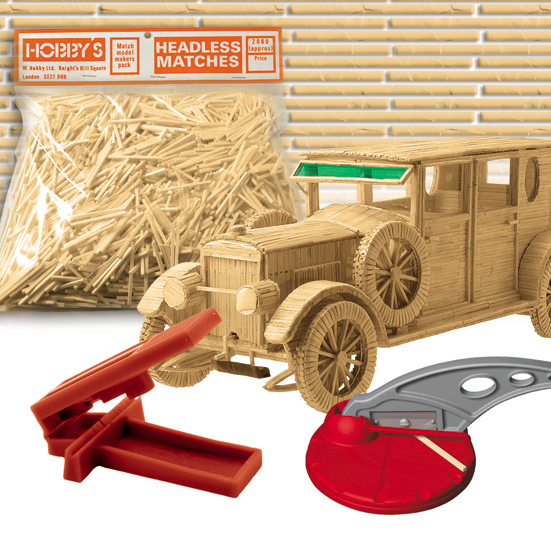
Due to expansion of the wholesale division, Whyte Ridsdale & Co Ltd, outside storage facilities were taken about 1970 with Bryant & May who were the UK's largest manufacturers of matches. This led Len Wilson, the Sales Director, to start thinking about making model kits using match splints from the landlords; after much research he obtained a 50 year-old leaflet showing various models which could be made from match splints. This art was quite popular in prisons, helping pass time for the inmates, which continues to this day.

To simplify the construction of models, Len had the idea of supplying pre-cut cardboard formers onto which the match splints could be glued, thus reducing the build time required. He made the first prototype, a windmill, and then made up a second model with several refinements; at the same time he wrote out detailed instructions which were carefully checked before the product was released onto the market in 1972 under the name of Matchbuilder.

The same process was followed for subsequent models: the Norman Church and Thatched Barn soon followed; when Len had finished writing the instruction he gave them to experienced model makers to follow and comment on prior to production. Several of these became good friends over the years and eagerly awaited new models and the new challenges which these bought.

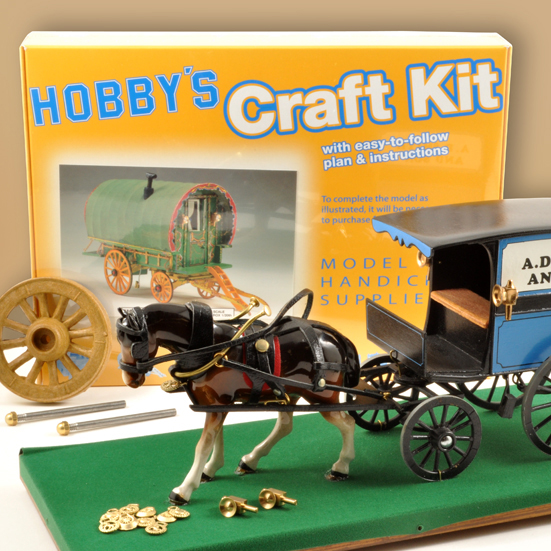
One problem which took some time to overcome was the making of a wheel, so that it was round rather than with angular edges. This was finally achieved and incorporated in the Gypsy Caravan, which was popular for many years, to be joined by the Stagecoach and, probably the most successful model of all, the 1920's Omnibus.

After Len Wilson retired due to ill health, he continued his passion for Matchbuilder and produced at least one new model every year, encouraged by his wife Hilda and assisted in matters such as packaging design by his daughter Sue. Although it was never supported by large advertising budgets, the appeal of Matchbuilding grew with its own impetus, and several competitors appeared on the market over the years, much to Len's delight as he considered this to be a great form of flattery. When he became too ill to continue marketing and inspiring the salesforce with his boundless enthusiasm, sales began to slow down and it was decided that the rights to matchbuilder would be sold to Hobby's, a leading company in the model trade.

Copyright © 2007 W Hobby Limited